
Your cart
There are no more items in your cart
Your Off-Grid LiFePO4 Battery Will Never Use Its Cycle Life
It is July. A pump house sits at the end of a long track, and its batteries have been at full charge for three weeks. They live in a sealed steel cabinet in direct sun, built to keep the weather out, and inside it the temperature has passed 40°C. Nobody has been near the site for a month.
On paper that battery is almost new, with a few dozen cycles on it. In reality it is the one being worn out, and the cabinet meant to protect it is trapping the heat.
Every LiFePO4 datasheet leads with a cycle life figure, often somewhere between 3,000 and 8,000 cycles. It is the number people compare and the one the adverts shout about. For an off-grid system sized properly, it is the wrong number to buy on.
The arithmetic
Off-grid systems are designed with three to five days of autonomy. With three days to 80% usable depth of discharge, an average day takes a third of an 80% cycle out of the battery. With five days it is a fifth. That is 70 to 120 cycles a year, counted the way datasheets count them, and that is if the battery works every day. On a bright day the load runs straight from the panels and the battery barely moves.
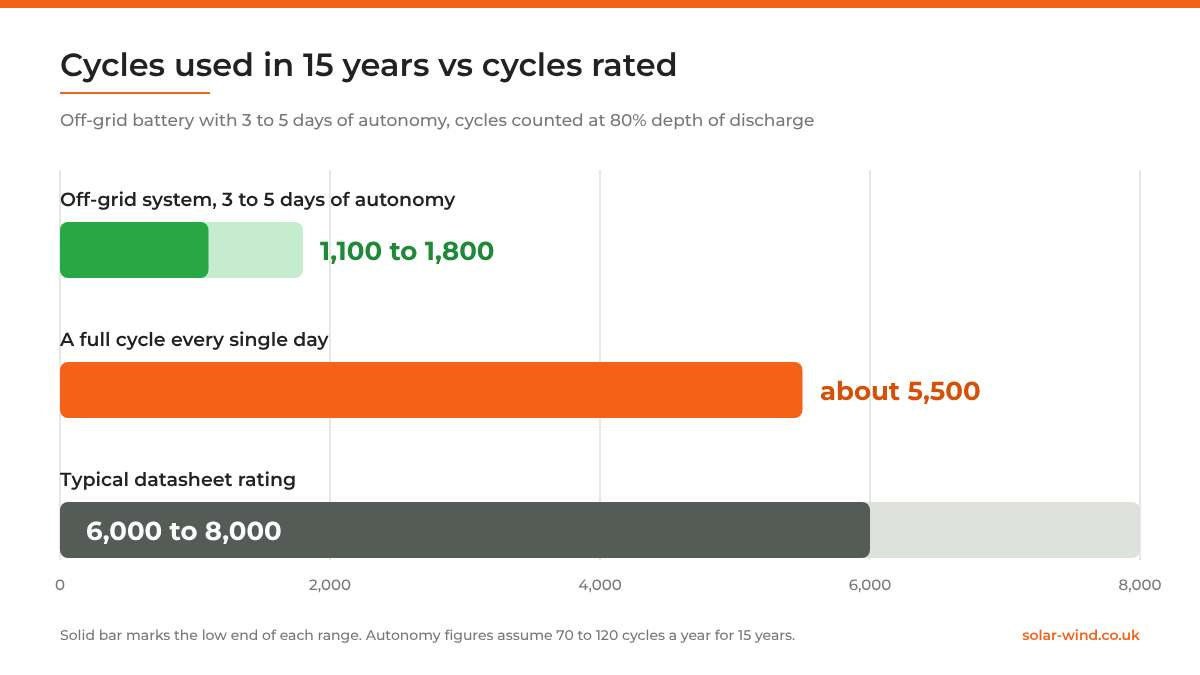
Over a 15 year life, that is 1,100 to 1,800 cycles at the very most. A battery rated for 6,000 has barely been started. Even a full cycle every single day for 15 years comes to about 5,500, which is below the headline figure on most batteries. Years are the limit, not cycles.
What actually wears batteries out
Cells age with time, in use or not, and the cause is well documented. Studies on LiFePO4 cells keep finding that temperature does the most damage, with state of charge second. In one, cells held at 30°C showed no measurable capacity loss while cells at 45°C and 60°C did, and cells stored fully charged aged faster than cells stored part charged.
A UK off-grid battery gets hurt twice a year, in opposite ways. In summer it sits near full, which ages cells, and in a hot enclosure it ages them faster. In winter it is at its lowest and works hardest, and charging in freezing weather can permanently damage the cells. The system that hardly ever cycles is still exposed to both.
So the questions that decide how long a battery lasts are where it lives and how it is charged, not how many cycles it was tested for.
An IP rating changes what the enclosure has to do
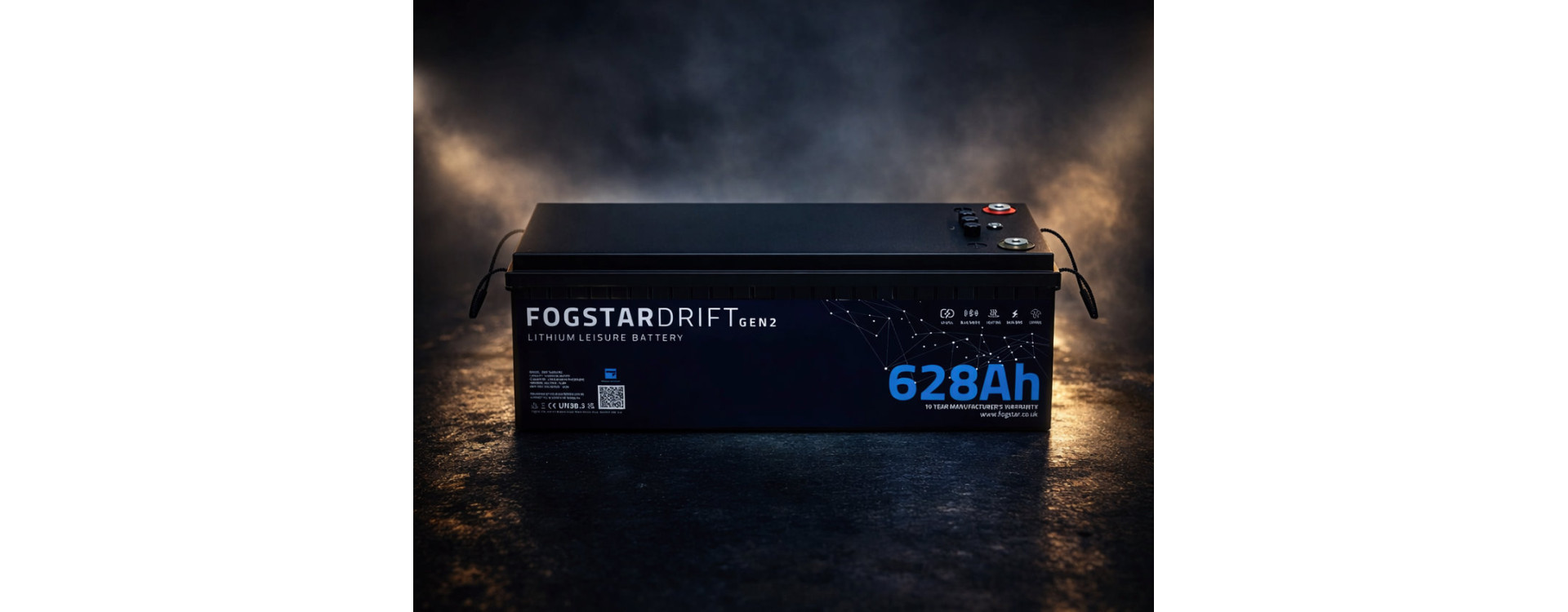
Many Fogstar batteries carry an IP65 or IP67 rating, in a market full of open rack batteries that need a clean, dry room. IP65 gives dust tight protection and resistance to water jets, and IP67 adds temporary immersion. That is a real advantage for pump houses, outbuildings, boats and cabins.
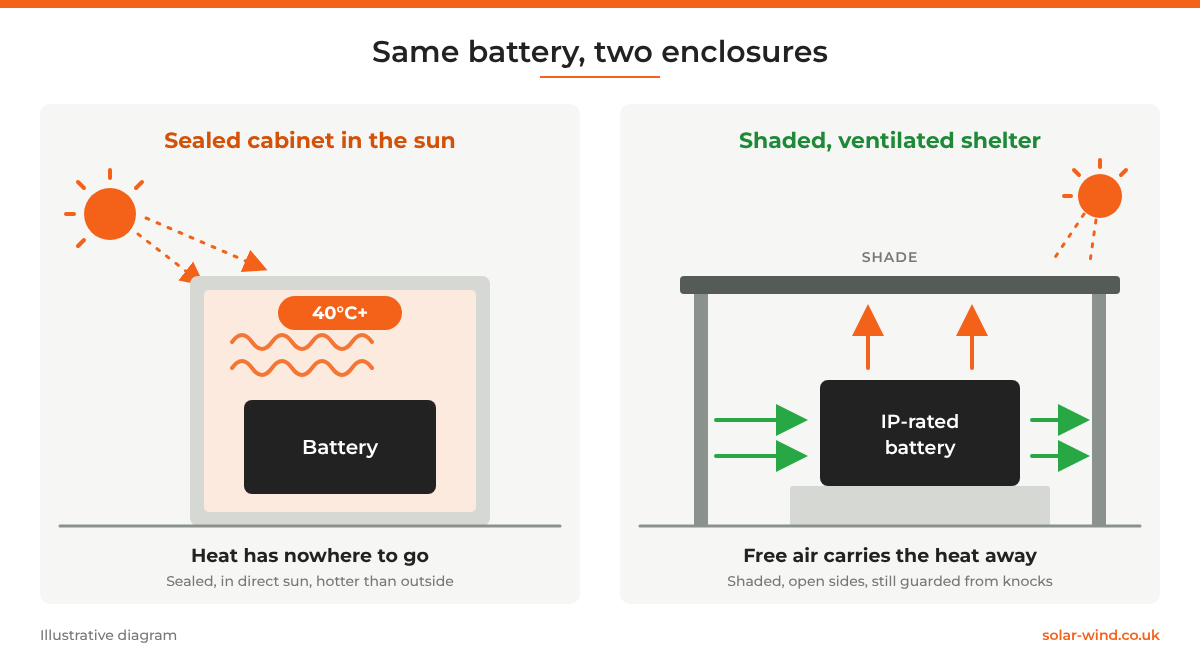
You still need some protection. The battery needs shade, because a dark case in direct sun heats up fast whatever its rating, and it needs guarding against knocks and vermin, with the terminals and cabling covered. What the rating removes is the need for that protection to be a sealed, weatherproof box. A shaded, ventilated shelter with free air around the battery sheds heat far better than a closed cabinet.
Every battery still has a temperature range, and charging limits matter at both ends of the year. Shade, airflow and a cool aspect count for more than how weatherproof the enclosure is. The rating covers the battery case, not the cabling and terminations, and the manufacturer's clearance guidance still applies. The IP rating gives you the freedom to choose a cooler, more open setup, and you still have to choose it.
A warranty measured in years
Fogstar backs its batteries in years, which is the right unit. The Drift range carries a 10 year warranty, and the rack batteries carry six to eight years depending on the model, with UK-based technical support alongside. For a system you expect to run for a decade or more, that is a stronger statement of confidence than any cycle figure. Check the terms for your model and register the battery when it arrives.
The real danger is not seeing it
If heat and time wear a battery out, the worst failure at a remote site is the quiet one. A fan stops, a cell group drifts out of balance, or a temperature creeps higher every summer. Nothing announces it, and a site visit finds the damage after it is done.
That is why a battery that communicates matters more than a big cycle number. Fogstar publishes connection instructions for Victron GX devices. The battery talks to the Cerbo GX over CAN bus, so the inverter and chargers work to the battery's own limits, and the system reads a true state of charge from the BMS instead of guessing from voltage. Put the GX device online and the whole system is on the VRM portal, with email alarms when something moves out of range.
Fogstar's own app is handy on site, but it works over Bluetooth, so you have to be within range of the battery. VRM is the difference between finding out in July and finding out in October. It is worth confirming exactly what your model reports to VRM, and getting the wiring right at design stage: the battery connects to a CAN port set to 500 kbit/s, which is a separate bus from the 250 kbit/s VE.Can network linking Victron's own devices.
VRM can also warn you before heat does the damage. Fit a temperature sensor in the battery enclosure and connect it to the Cerbo GX, using a Victron temperature sensor or a Ruuvi tag, then set an alarm rule on it in VRM with a high limit and a short delay. An email or phone notification arrives when the enclosure runs hot, wherever you are. For a local response, the Cerbo relay can also switch a fan on temperature.
When cycle life does matter
A system that cycles deeply every day will use its cycles fast. That means a hybrid system shifting a full day of energy, a commercial site with large overnight loads, or a small battery backed by a generator. If that is you, check the depth of discharge the figure was tested at. Most off-grid systems are not like that, but the headline number is sold to all of them.
What to buy on instead
Look at the design life and the warranty terms, the temperature range for charging and discharging, the quality of the BMS, and whether the battery talks to the rest of the system so you can watch it remotely. Size for generous autonomy so it works shallow, and put it somewhere cool, shaded and well ventilated. That will do more for your battery than any cycle count.
If you would like help choosing a Fogstar battery for an off-grid system, get in touch.
Browse the full Fogstar LiFePO4 range, or go straight to 12V, 24V or 48V batteries, which include IP65 modular stacks.
Ask about off-grid batteriesCommon questions
How long will a LiFePO4 battery last off-grid?
Rack batteries from Fogstar are quoted with a 15 year design life, and warranties run for 6 to 10 years depending on the range. In an off-grid system with days of autonomy, heat and age end a battery's life long before the cycle count does.
Does an off-grid battery need cooling or heating?
Temperature is the biggest single factor in how fast a battery ages, so shade and airflow matter more than almost anything else. Check the charging temperature range for your model as well. One IP65 rack battery charges between -10 and +40°C.
Can I monitor an off-grid battery remotely?
Yes. Connect it to a Victron GX device and the whole system appears on the VRM portal, with alarms by email or phone. Add a temperature sensor and VRM can alarm on the enclosure temperature too.
Does an IP65 or IP67 rating mean I can leave the battery outside?
It means the battery itself can cope with dust and water, so it needs far less of an enclosure. It still needs shade, shelter from impact and protected cabling.
Related reading
Last updated 12 November 2026
Related posts
 Lead Carbon Batteries - The Future Of Lead Acid ?
Lead Carbon technology would seem to offer the holy-grail for traditional lead acid batteries ....
Read more
Marinising Solar PV Modules for Boats & Yachts
What to consider when selecting solar pv modules for marine use and what you can do to ensure long-term reliability...
Read more
Make Your Off-Grid Wiring 4x More Reliable
How to make your off-grid solar pv or wind installation safer, neater and more reliable.
Read more
When Is A Fuse Not A Fuse ?
Ensure your off-grid power system is properly protected - use the correct fuse. This article discusses the importance...
Read more